The Australian aesthetics industry is on the cusp of a significant transformation. From 2 September 2025, the Australian Health Practitioner Regulation Agency (AHPRA) and National Boards will enforce new, comprehensive guidelines governing non-surgical cosmetic procedures. These changes represent the most significant regulatory shift in recent years, with a clear aim: enhancing patient safety, transparency, and practitioner accountability.
For practitioners, clinic owners, and device suppliers like Cutera, these reforms are an opportunity to reassess processes, reinforce standards, and lead with education and patient care.
Why the Change?
This regulatory overhaul follows years of concern about inconsistent standards and patient safety risks across the booming cosmetic industry. With the Australian market projected to grow to USD 238.77 million in 2025, regulators are prioritising stronger safeguards to address rising complaints and consumer confusion.
Between September 2022 and March 2025, AHPRA received around 360 complaints and over 1,500 calls to its dedicated cosmetic surgery hotline — a clear signal that reform was needed.
Key Changes Clinics Need to Know
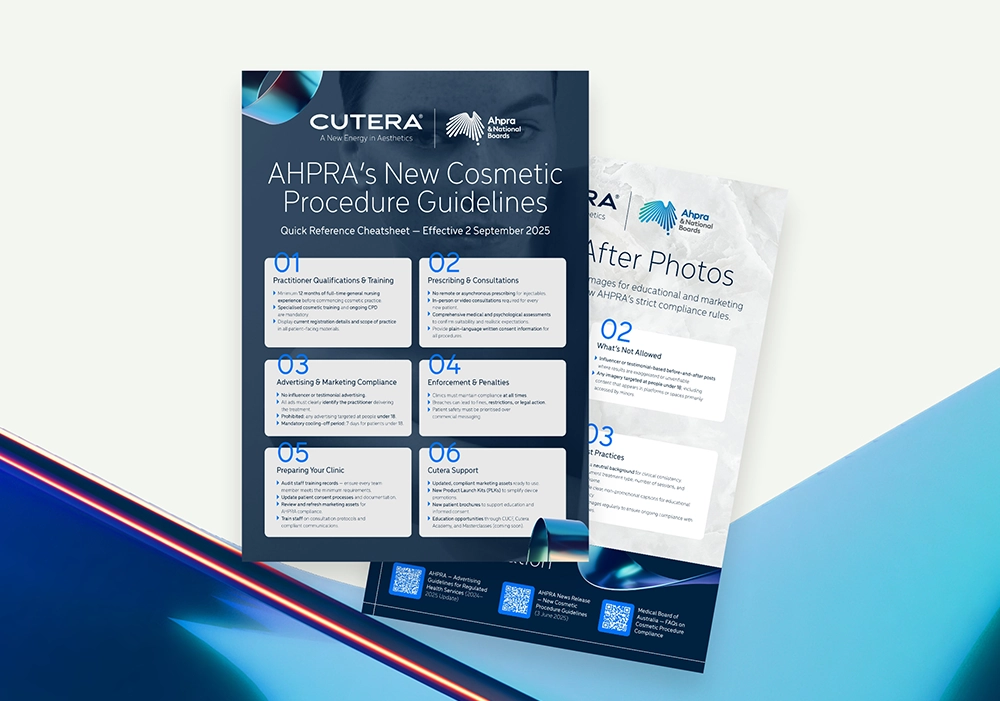
1. Practitioner Qualifications and Training
Registered nurses and other non-doctor practitioners must now:
Complete at least 12 months of general nursing experience before undertaking cosmetic practice.
Undergo specialised cosmetic training and continuous professional development to ensure competence in new techniques and technologies.
Clearly display their registration details and scope of practice in all patient-facing materials.
This places added emphasis on ensuring clinic teams are well-trained, and that patients understand who is performing their treatment and their qualifications.
2. Tighter Prescribing and Consultation Rules
Remote or asynchronous prescribing is no longer allowed. Each patient must:
Have an in-person or video consultation before any injectable prescription.
Undergo a psychological and medical assessment to ensure realistic expectations and suitability.
Receive comprehensive, plain-language written information before consenting to any procedure.
3. Stricter Advertising Standards
No testimonials from social media influencers or content that exploits insecurities.
Mandatory disclosure of the practitioner performing the procedure.
A seven-day cooling-off period for patients under 18, along with a prohibition on underage-targeted advertising.
For clinics, this means a careful audit of all marketing channels – from Instagram posts to EDM campaigns – to ensure full compliance.
4. Enforcement and Penalties

Opportunities for the Industry
While some practitioners view the changes as challenging, these reforms offer an opportunity for professionalisation and trust-building across the sector. Clinics that invest in staff training, transparent communication, and compliance will be best placed to thrive in this evolving landscape.
For Cutera partners, there’s an opportunity to lead with education:


Integrating compliance-focused messaging in marketing for devices like Secret™, highlighting safety and evidence-based results.
Preparing Your Clinic for 2 September
Here’s a quick checklist for clinics ahead of the September rollout:
Audit your training records and ensure all staff meet the new minimum experience and CPD requirements.
Update consent processes and documentation to meet the new standard.
Review advertising materials, removing any non-compliant testimonials or influencer partnerships.
Communicate proactively with patients, reinforcing your clinic’s commitment to safety and transparency.
Final Thoughts
AHPRA’s new guidelines are more than regulatory change; they’re a wake-up call for the entire cosmetic industry. By embracing these standards, clinics can elevate patient experiences, improve trust, and ensure that innovation — like the technologies delivered by Cutera — is grounded in safety and professionalism.